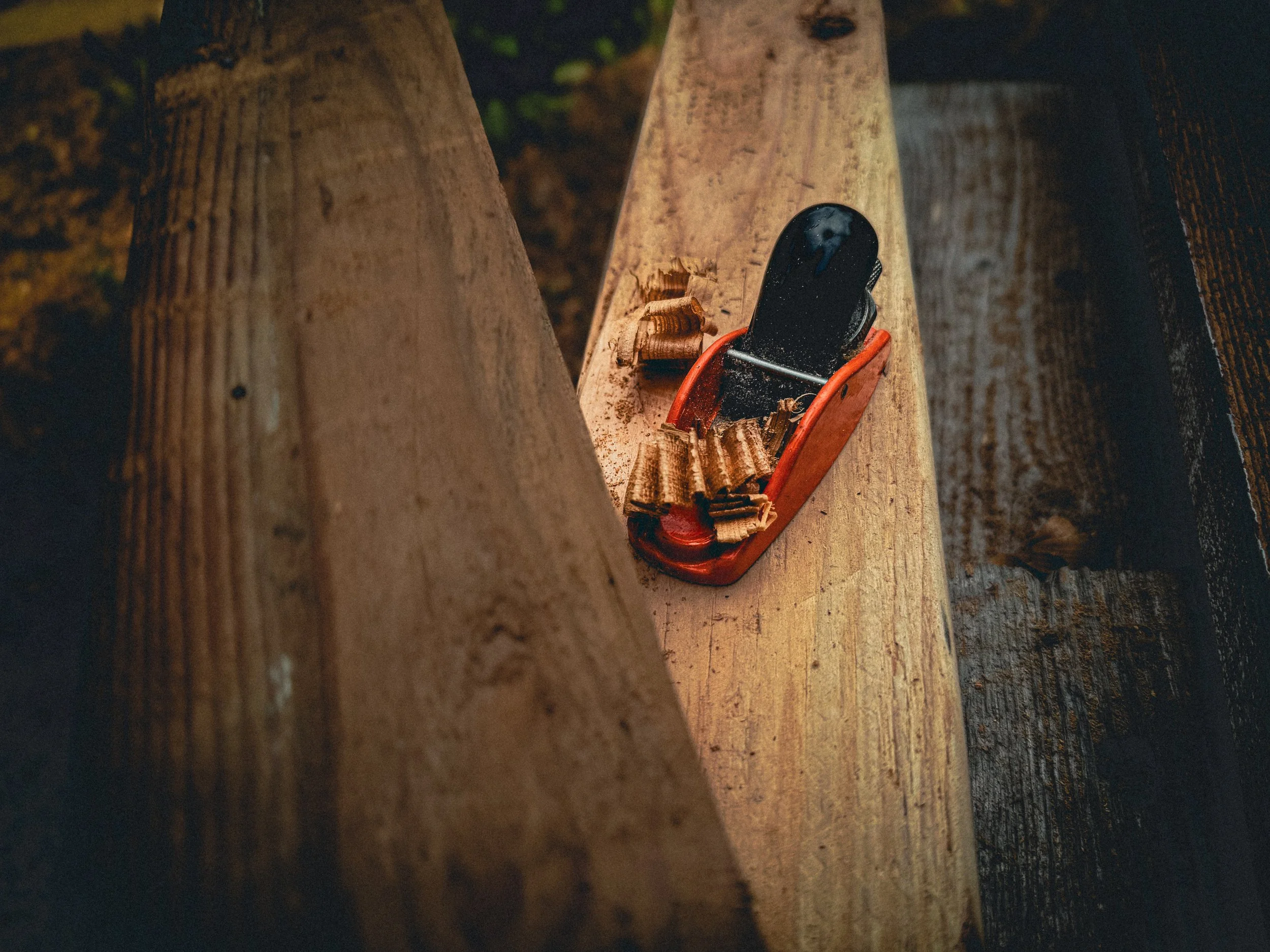
Discovering The Plane
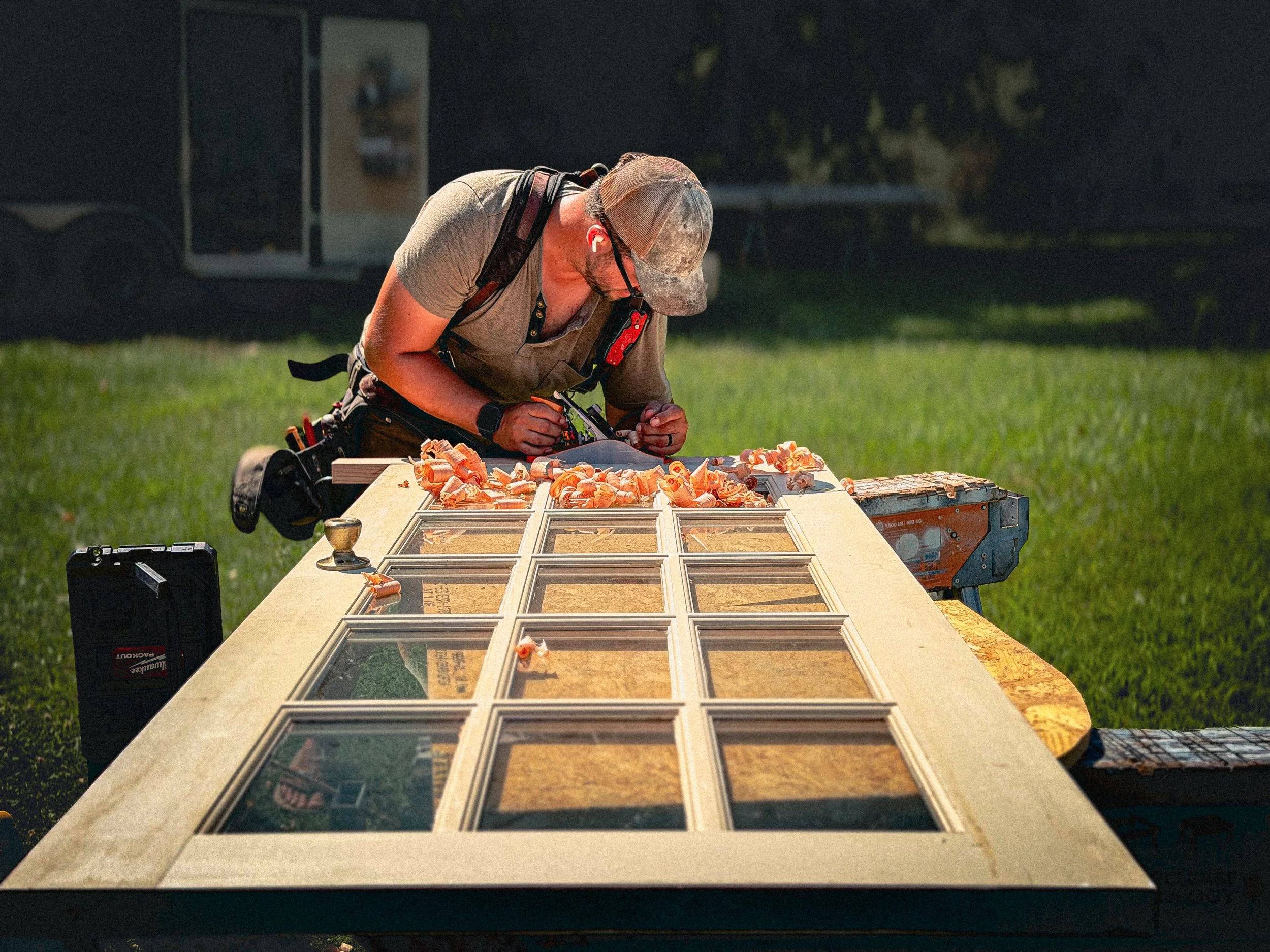
For a salvaged interior door, I added a piece of wood to the bottom rail to extend the overall length. I could have used a box planer to bring it to the same thickness as the door, but it was faster to glue the new piece flush on one face and then mill the opposite face with a hand plane until it matched.
Carpenter is a broad term.
Saying someone is a carpenter is almost like saying something is a tree. Yes, a large plant growing out of the ground is technically a tree, but that word covers countless different species.
If I were to branch off the carpenter term, I would say I am about as far from being a woodworker as you can get. Woodworker is another broad definition with plenty of branches, but in my mind it leans more toward the shop environment. Building individual pieces with a finer level of detail than the home-building side of carpentry.
But to be a good carpenter is to understand your materials, and that's where woodworkers excel. Over the years, I've found myself diving into their knowledge. Learning how they treat and work with wood, then figuring out how to apply those lessons to the home-building process.
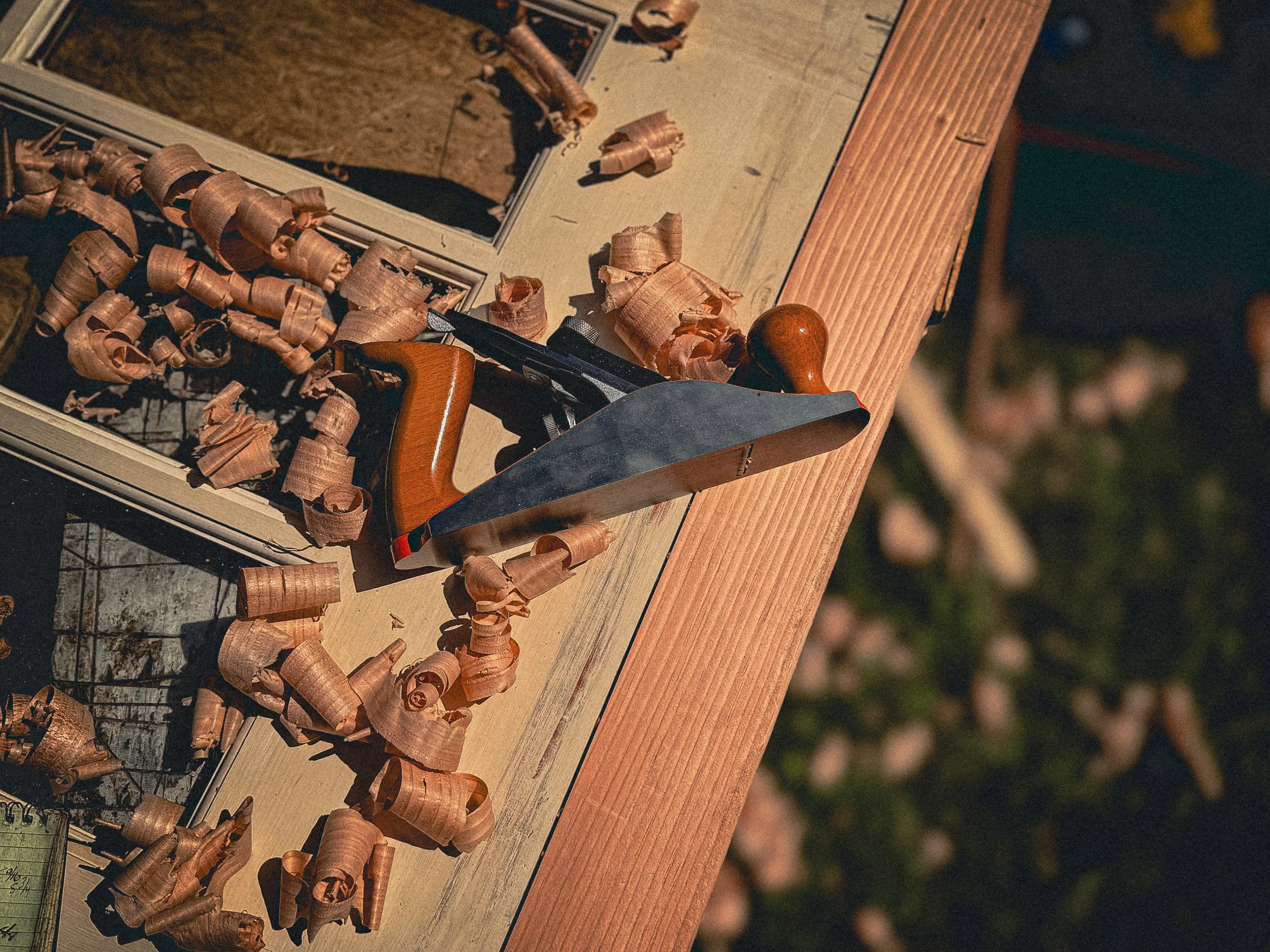
Production efficiency is a concern in every trade, but woodworkers have always seemed to leave room for hand tools in their process. Home-building carpenters, on the other hand, have largely traded those away for the speed and convenience of power tools.
I'm not going to pretend power tools aren't the superior solution in most situations. I'm not about to replace everything I own and go back to a traditional setup. But lately I've had an itch to expand my toolbox with some of those older, more traditional tools.
My latest purchase was a set of Jorgensen hand planes. The price and the fact that I could pick them up locally made them worth experimenting with. At first, I figured they wouldn't see much use. Especially the #4 plane. I assumed the pocket and block planes would get the most action simply because they would be easier to carry around in my tool bags.
And if you can't tell from the build-up, I was wrong.
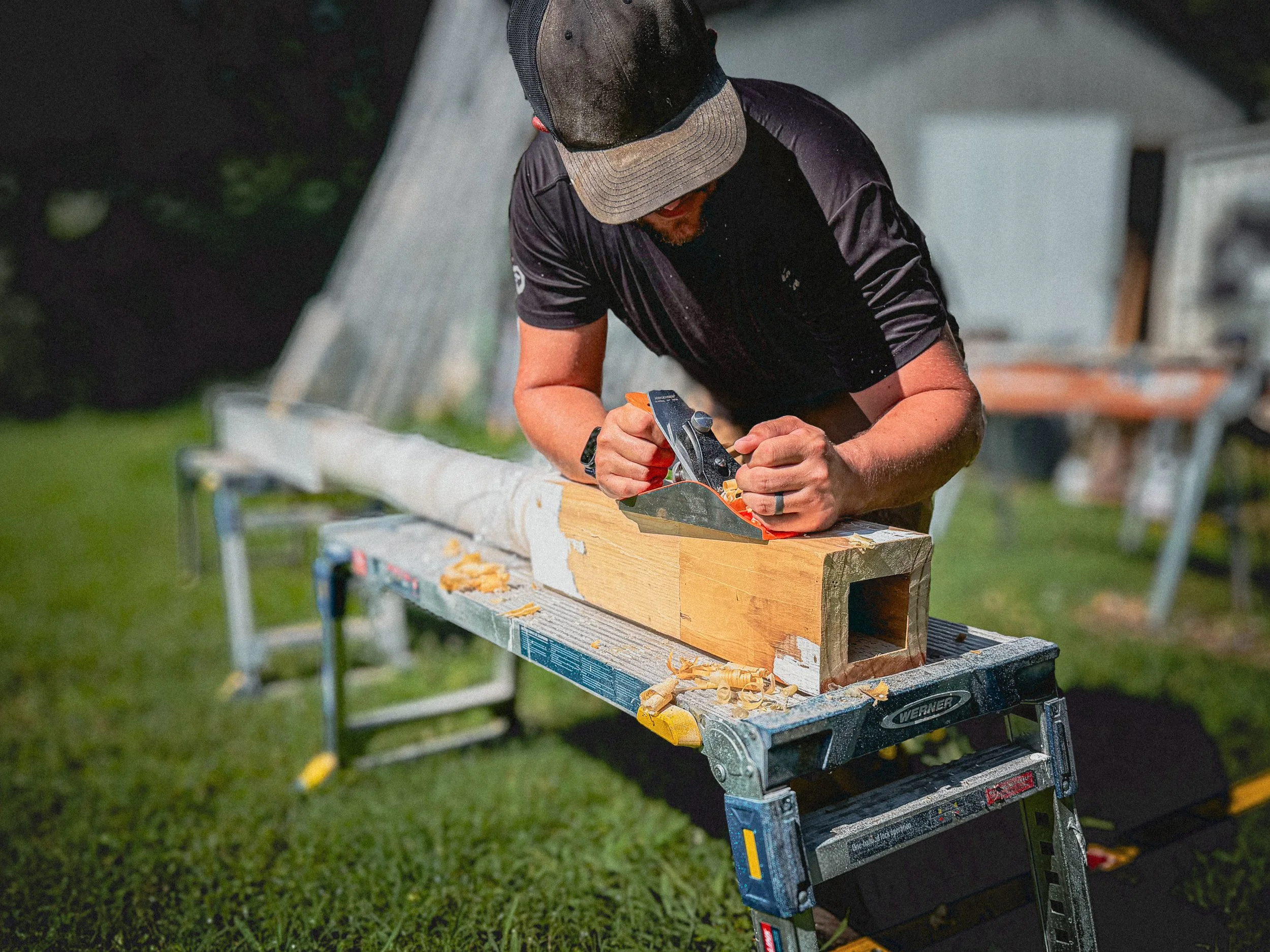
For a colonial post replacement, I sourced a matching-style post but could not find one at the required height. By reusing sound timber from the original post, I was able to extend the length; however, the old and new posts differed in width. The simplest solution was to establish the reference plane on one face and mill the remaining faces to match. Due to the post’s size, a benchtop planer was impractical to use and difficult to stop safely, so I completed the work with a hand plane. This approach proved efficient and straightforward, avoiding the need to set up larger machinery.
The #4 hand plane has already found its place in a handful of situations where it turned out to be the best solution.
Specifically, when I needed to remove a fair amount of material with control instead of accidentally gouging the surface. It has been especially useful over long runs of joined wood where the goal is to bring everything back into the same plane.
In the past, I would have reached for a sander loaded with aggressive sandpaper. But a sander, especially when paired with dust collection, takes up a lot of space, is limited by hoses and extension cords, and just feels like more of a production. There's also the risk of leaving low spots if you pause too long in one area.
With the hand plane, I simply set it on the surface and let the flat sole do the guiding. Yes, you have to put some muscle behind it, but with the blade adjusted correctly it glides surprisingly easily while peeling away thin, consistent shavings. Those shavings fall harmlessly to the floor instead of filling the air with dust. And because every pass is easy to read, you always know how much material you've removed and when it's time to stop.
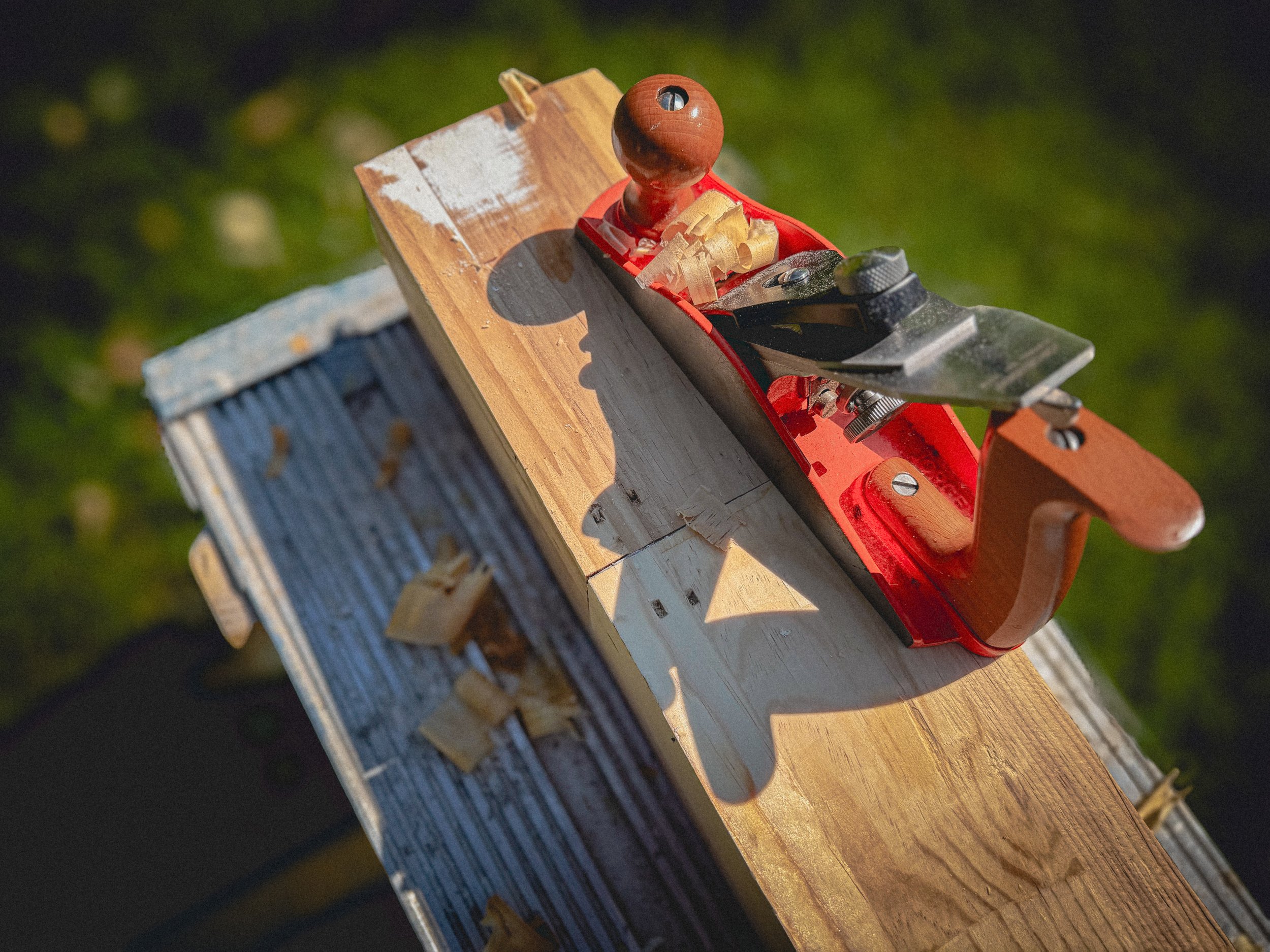
I will say that I was using it on larger areas where a sander would have taken considerably longer. I'm still learning these planes, and I know they're capable of producing an incredibly smooth finish. But for now, once I get within about 1/16 inch of where I want to be, I switch to a sander for the final finish. At this point, the plane hasn't replaced the sander—it has simply found the part of the job where it excels.
In the two situations that immediately come to mind, it was invaluable. One was correcting an old section of misaligned wood flooring. The other was bringing a repaired wooden post back into square and into plane. In both cases, it was simply the better tool.
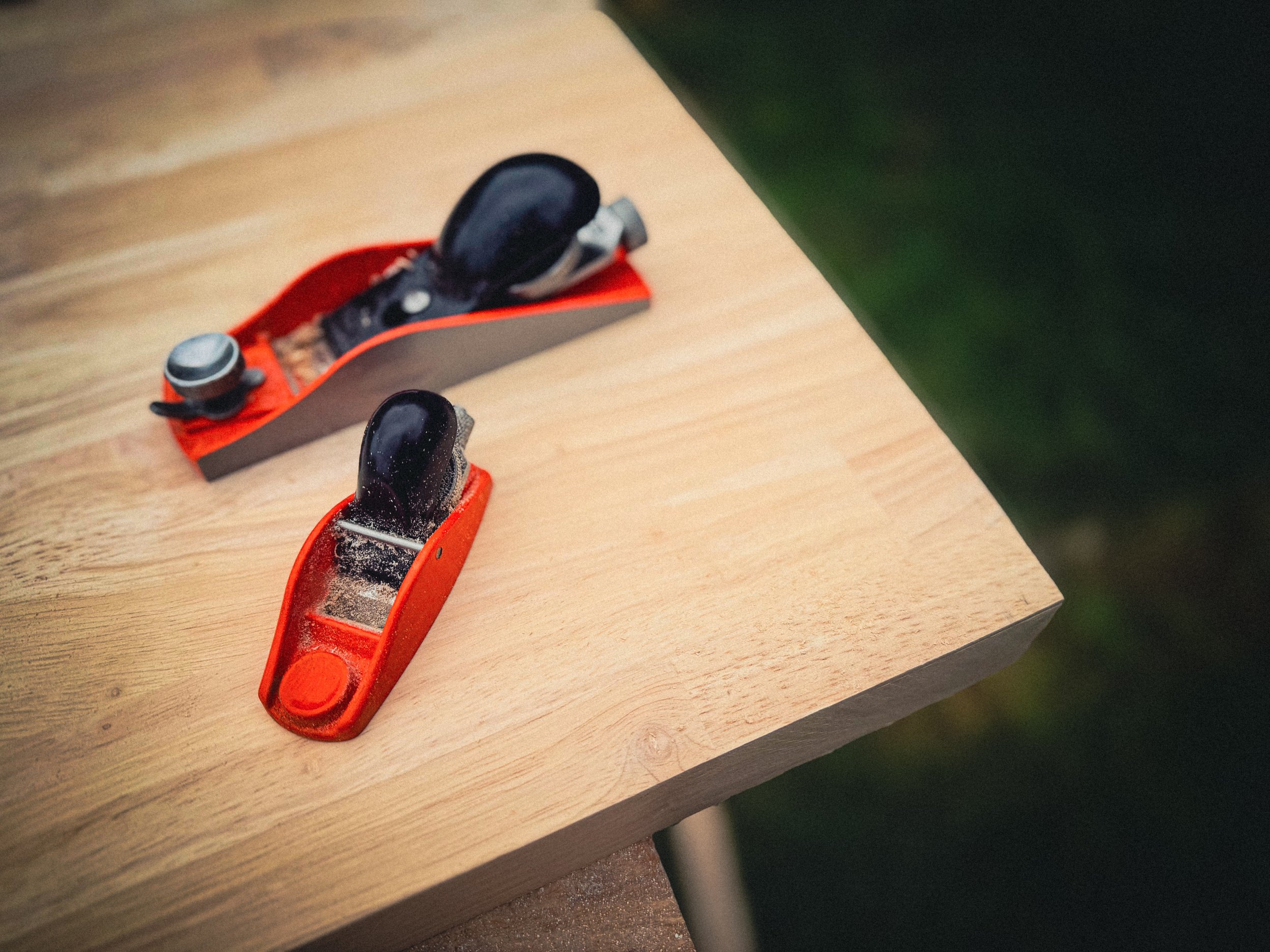
As for the pocket and block planes, they've been interesting. They've worked well in a few small situations, but I still feel like I'm learning where they truly shine. Most of the times I've used them have been rushed jobs rather than opportunities to really understand what they're capable of.
If there's one thing I've taken away from this, it's that there's always something to learn from another corner of the trade. The more I learn from woodworkers, the more I find techniques and tools that have a place in home building. Not everywhere, and certainly not on every job, but when the right situation presents itself.
There was a time when seeing these tools on both sides of the trade was completely normal. And I’m hoping to rediscover with curiosity whether they still deserve that place today.