Photo Journal 2026.02.02-06
This week brought the kind of challenges I’ve come to expect as a commercial handyman. Between winter storms and sickness at home, my schedule shifted fast. Add in extra family responsibilities, and the week turned into a push to stay on top of multiple commercial repair and maintenance jobs.
That meant some long days — starting around 2 a.m. and wrapping up close to 6 p.m. It’s part of working in facility maintenance and commercial service work. Not as common as it once was, but still well within reach. Years in the trades teach you how to manage the pace without getting overwhelmed — just steady, focused work, one task at a time.
Below is a photo recap from the week, highlighting recent handyman services and commercial projects:
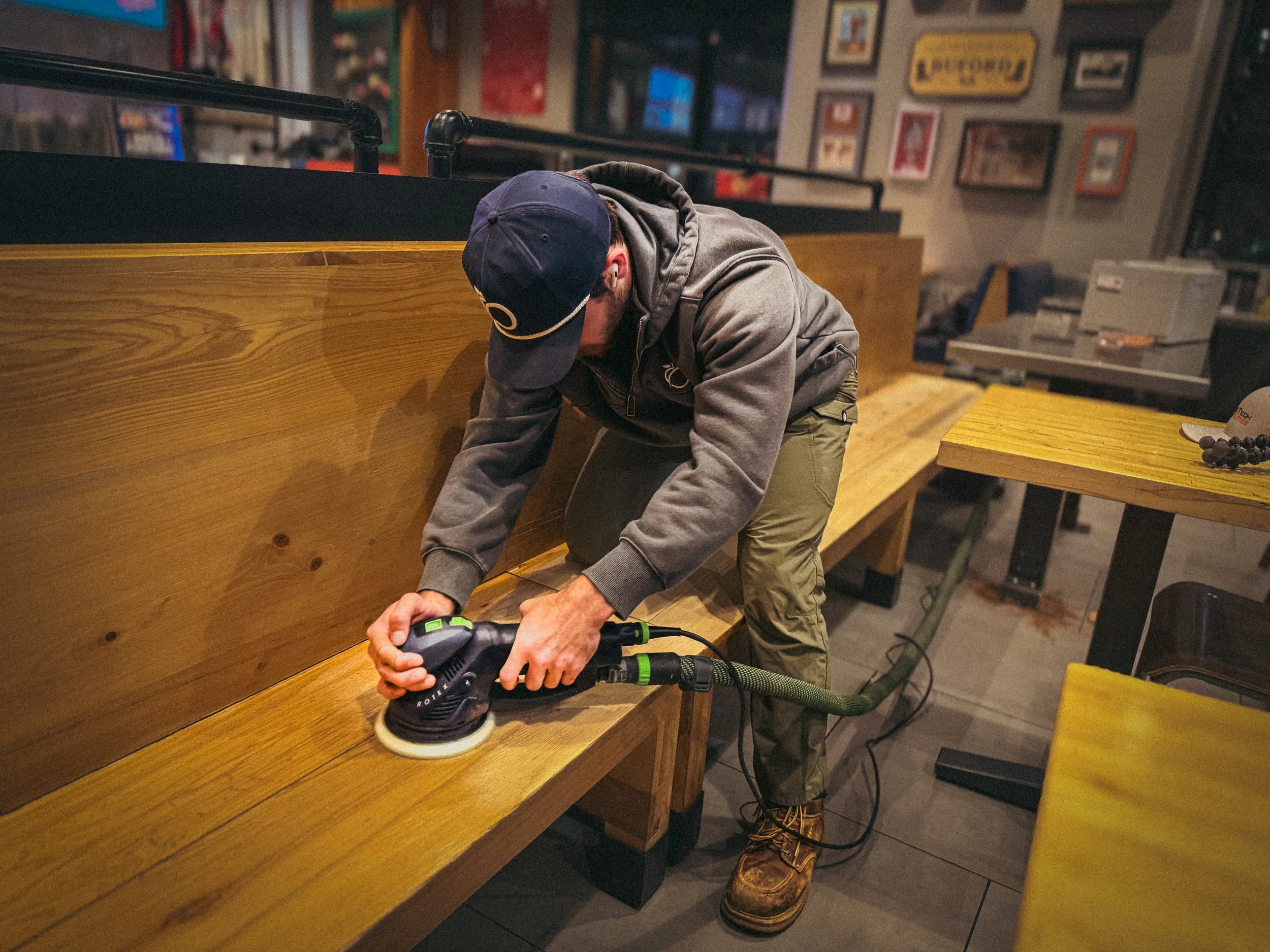
One of this week’s projects involved a quick service restaurant in Buford, GA that I help maintain through ongoing commercial handyman and facility maintenance services. The seating bench had taken on years of wear and surface scratches, and management wanted it brought back to a like-new appearance.
For jobs like this, efficiency and finish quality matter. Over the years, I’ve invested in Festool sanding equipment, and it continues to prove its value in high-turnaround commercial repair projects. Using the Festool Rotex sander, we were able to restore the surface far faster than expected compared to standard sanders, while maintaining a consistent, professional finish.
Projects like this show how the right tools and experience make a difference in restaurant maintenance and commercial interior repairs.
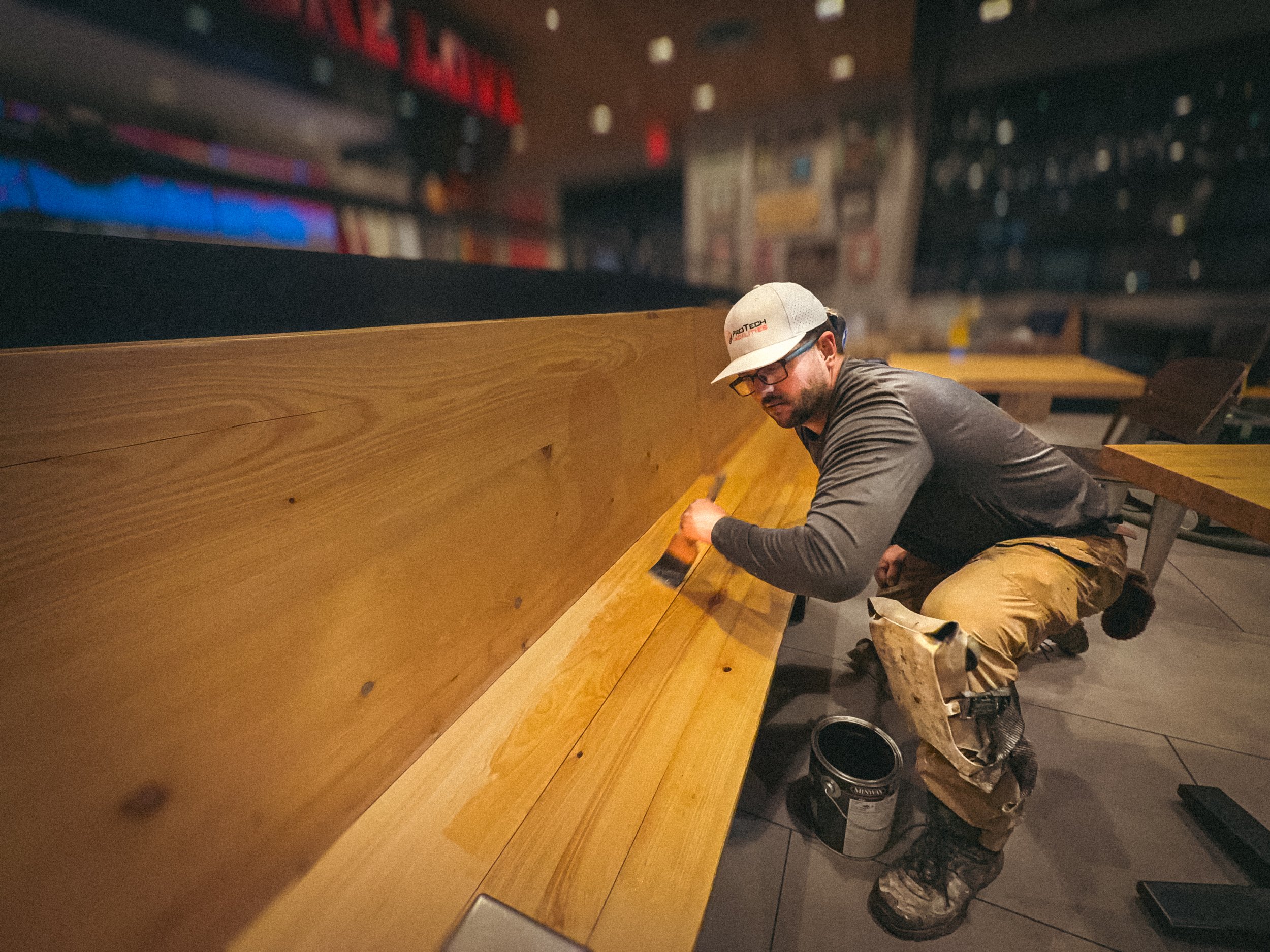
The real challenge with commercial painting and refinishing projects often comes down to timing. Using the right product matters, and for this bench we chose an oil-based polyurethane for durability in a high-traffic environment. The product has a four-hour dry time, which means scheduling has to be precise so the space is ready once the store opens and customers can use it without disruption.
Unlike doors or other fixtures that can be temporarily blocked off, removing seating impacts daily operations much more. In a quick service restaurant, especially in a busy metro area like Atlanta, GA, minimizing downtime is critical. Careful planning and off-hour work are key parts of successful restaurant maintenance and commercial handyman services.
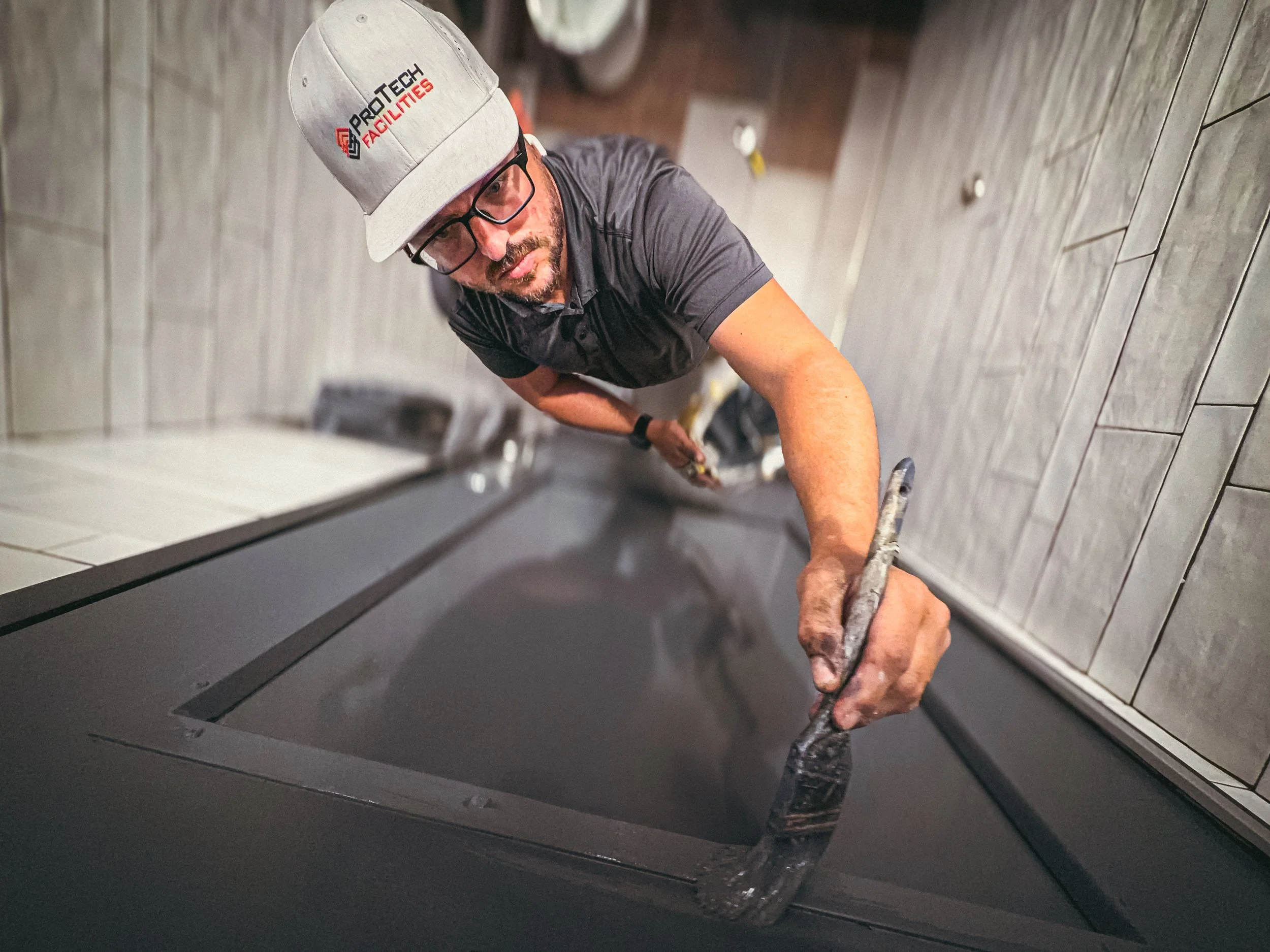
In most commercial facilities, the areas people use the most show wear the fastest. Public restrooms are usually the highest priority, which means they also require the most consistent maintenance and repair attention.
When it comes to restroom doors and trim, simple touch-ups often aren’t enough. These surfaces are typically coated in semi-gloss or gloss paint, chosen for durability in high-traffic environments. While those finishes hold up well, they’re also the hardest to blend. Spot repairs can stand out, which is why a full repaint is often the better solution to restore a clean, seamless, like-new appearance.
This is a common part of commercial handyman services and facility maintenance, especially in busy retail and restaurant settings.
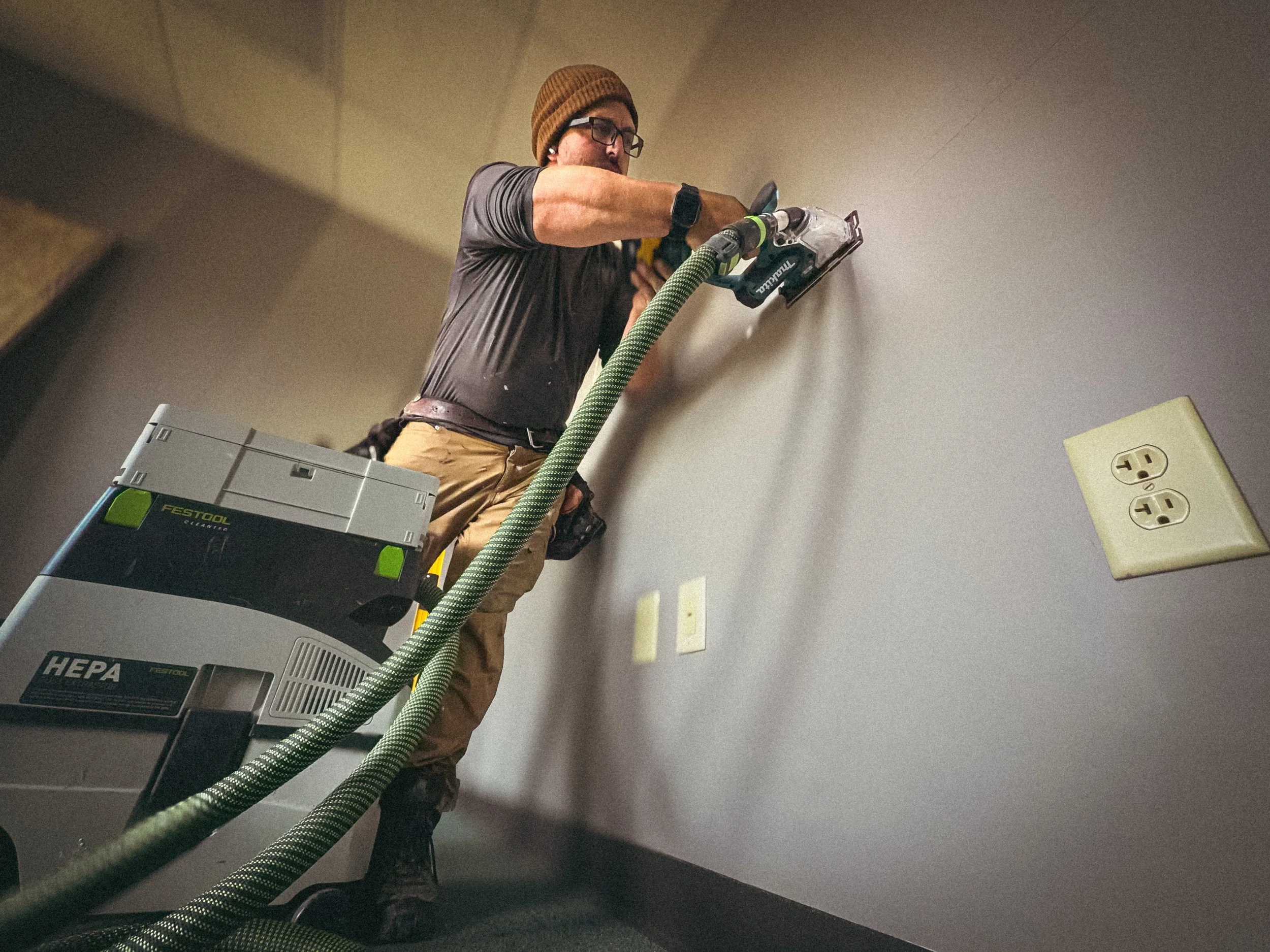
This project was for a local commercial property where the owner is preparing to open a new business that required a service window installation. Unlike residential construction, many commercial buildings use light-gauge steel framing and different building practices, which can introduce more unknowns during property modifications and tenant build-outs.
The first step was opening the drywall. There are plenty of ways to handle this, but last year I invested in a Makita drywall saw, and it’s become a go-to tool for commercial remodeling work. While it operates similarly to a jigsaw, it’s designed specifically for drywall. It features a clear dust-catching box and a shallow-cut blade that penetrates just deep enough to cut sheetrock without hitting what’s behind it. It also connects to a vacuum for larger removals, which is especially useful on projects like this.
For anyone doing remodeling, build-outs, or commercial handyman services, it’s a tool worth having.
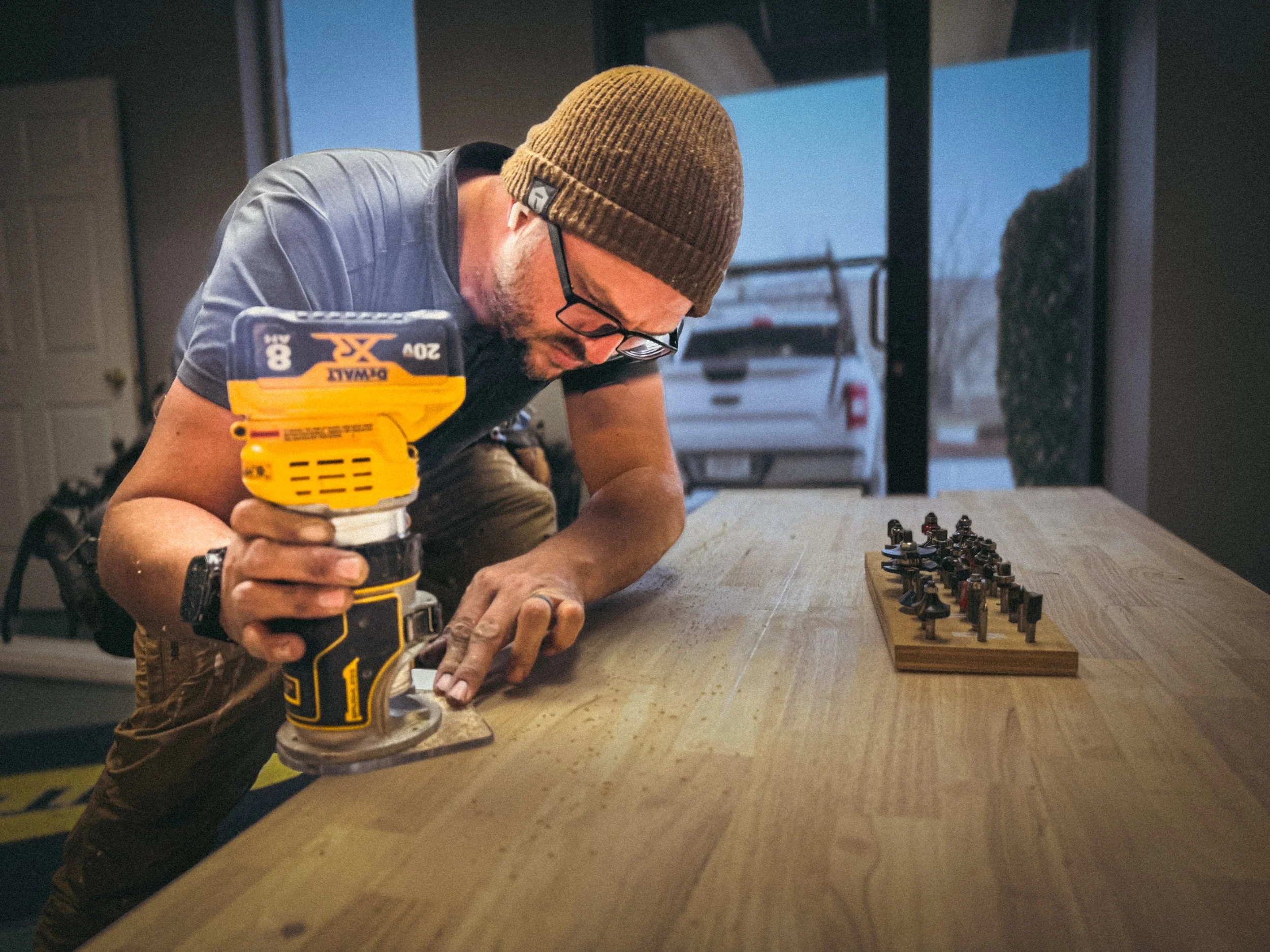
Carpentry is one of my strongest skill sets. Before focusing on commercial properties, I spent years working in residential remodeling and repair, and I still enjoy every opportunity to bring those skills into a commercial setting. Most of my current work leans more toward drywall, tile, concrete, metal work, and painting, but the foundation of carpentry always translates.
While the core principles are the same across building types, commercial carpentry often requires a slightly different approach in planning and execution. For this project, the client requested a butcher block countertop for their new service window. Adding a small, consistent round-over edge helped soften the look, making the counter feel more refined, durable, and professional — a great fit for a commercial interior build-out.
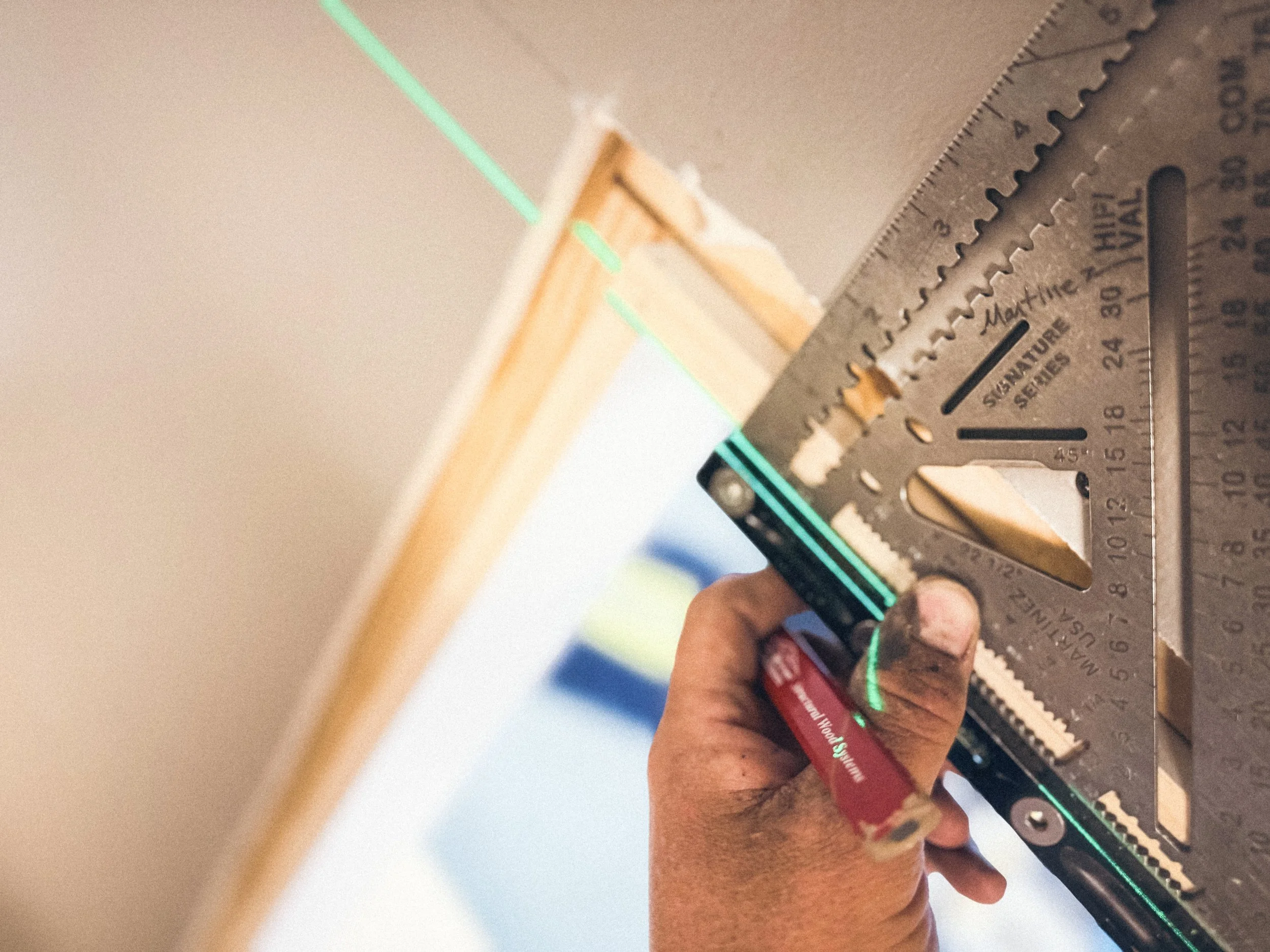
Not every tool is a necessity. A speed square is. This Martinez titanium speed square? Maybe not essential — but every time I use it, I find another reason I’m glad I invested in it.
This building carried a consistent ¼-inch reveal in the trim work throughout the space. The precision edge of this square made it easy to scribe and maintain that reveal accurately across the project, which is key in finish carpentry and commercial interior work.
And this photo? Total accident — but sometimes the unplanned shots turn out to be the best ones.
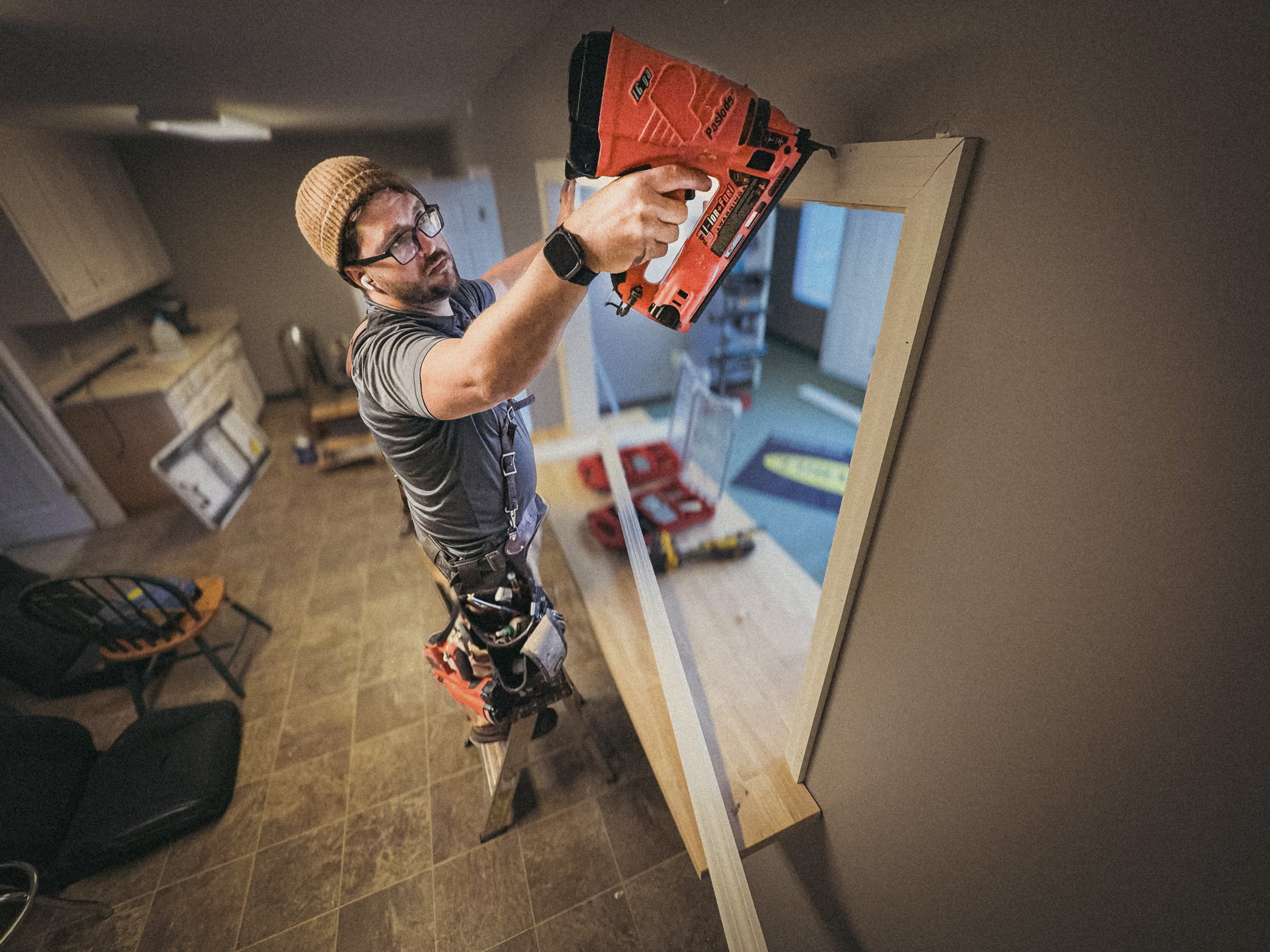
Finish carpentry has always been high on my list of core skills, but my work often leans toward more complex or urgent commercial repair and maintenance needs. I’ve never shied away from the tougher or less visible tasks, which sometimes means the finish work gets passed along.
Lately, though, more clients have been bringing me in specifically for finish carpentry and interior build-out work, and it’s been rewarding to see projects come together at that stage. While the fundamentals may seem straightforward, delivering clean, consistent results in a production environment takes focus and efficiency. This project was completed in two days, not including the structural carpentry, electrical rerouting, and drywall repairs that supported the final finish work.
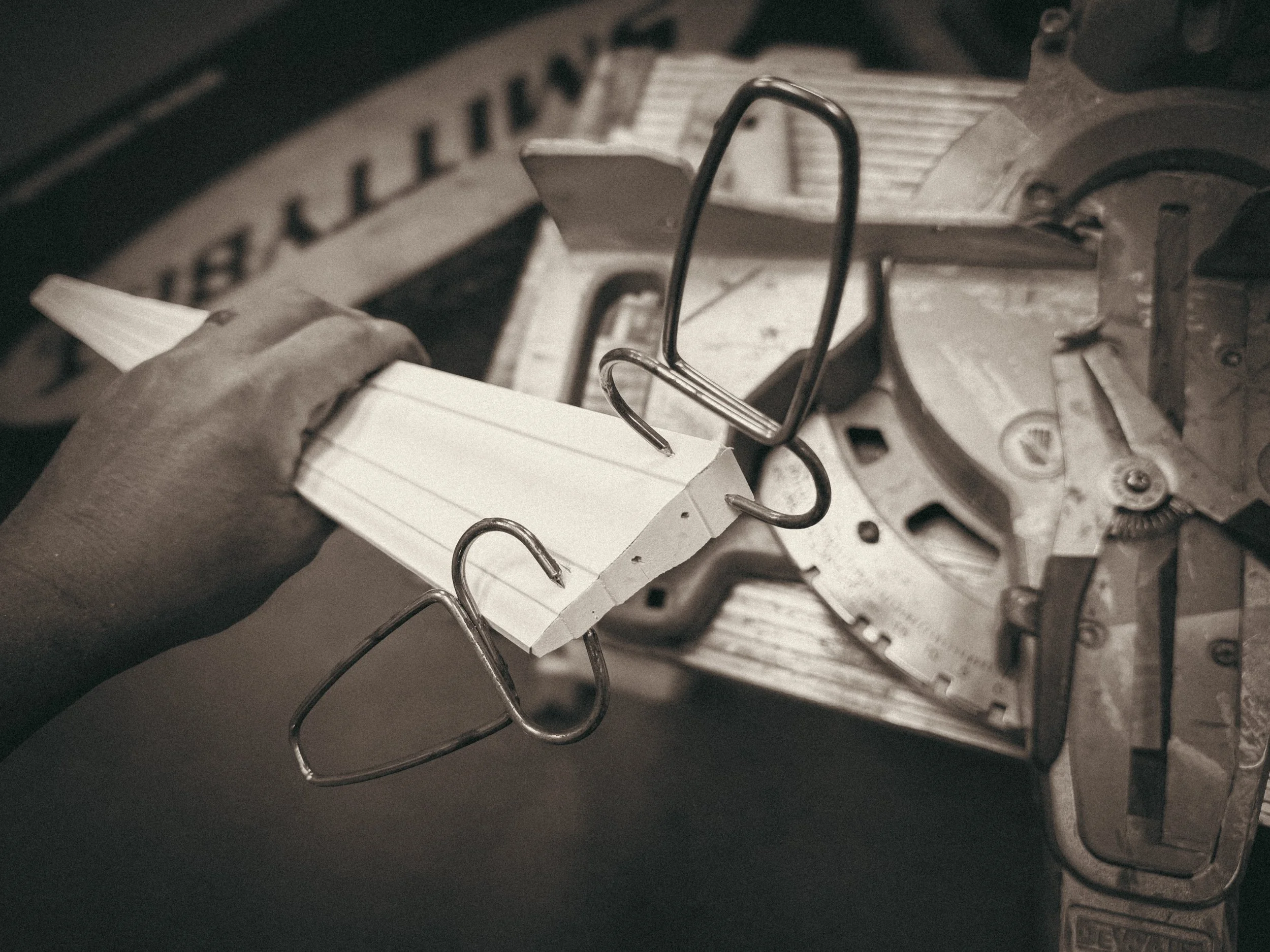
There are so many different approaches for ‘returning’ a piece of trim, but nothing beats a proper mitred return. It gives the look a more intential look.

This week I had the chance to help my friend Nick from Normal Landscape here, in Athens, Georgia. Nick and his wife, Jess, were installing a beautiful flagstone patio, and I always enjoy spending time with trades I know little about. Not only does it give me a behind-the-scenes look at their craft, but it also feeds my passion for photography, capturing the process as I learn. Every project like this teaches me something new, making me a little wiser with each experience.
If you’re interested in landscape design or looking for inspiration for your own Outdoor living space in Athens, check out Nick and Jess’s work at Normal Landscape
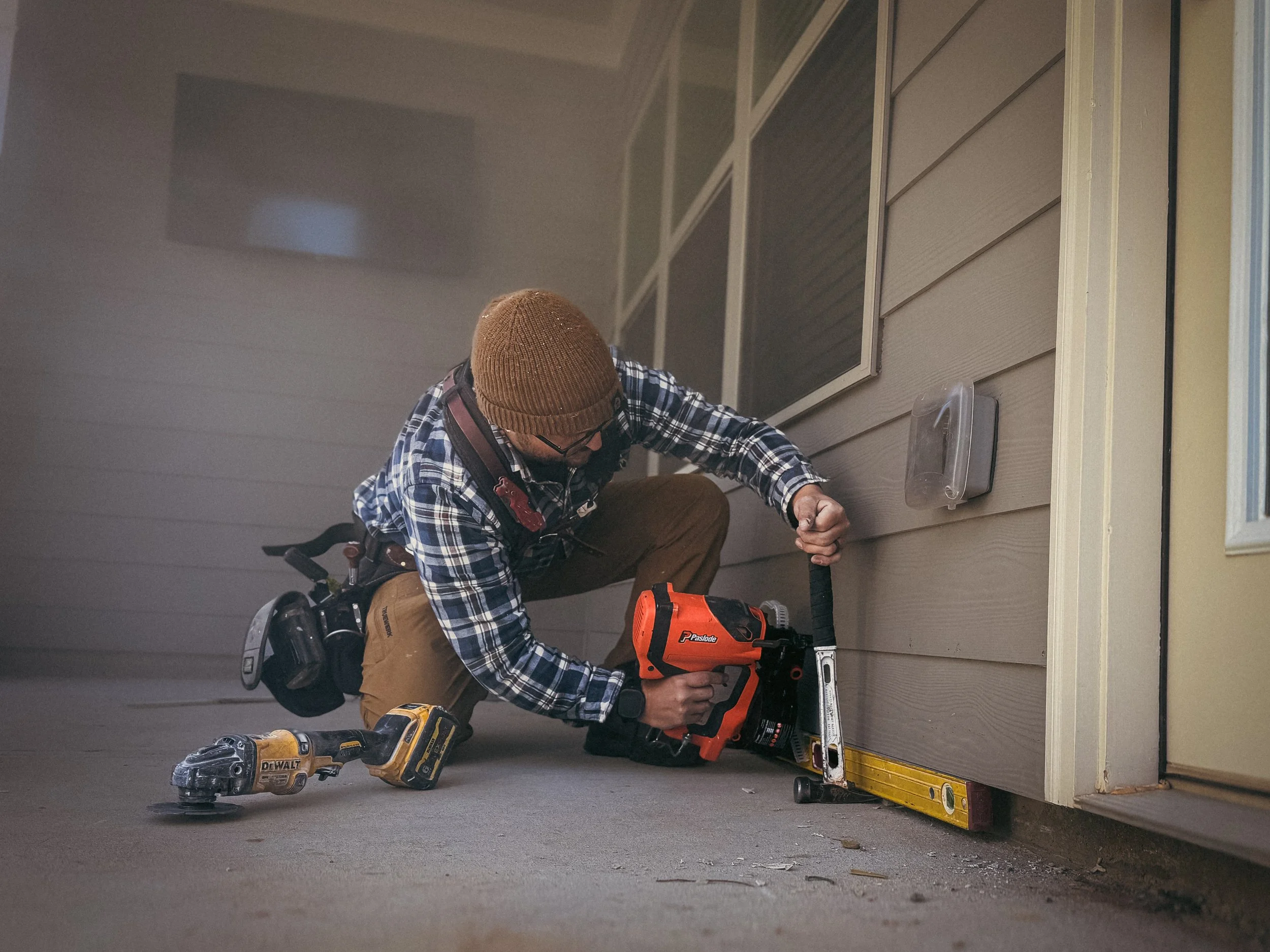
Fiber-cement siding can be a picky material to work with, especially when adjustments are needed. For this flagstone patio project in Athens, GA, we needed to raise the bottom board to provide proper clearance. Removing the board was straightforward, but reinstalling it can be tricky if you’re working from the ground. I was able to shim one end of the board level against the siding and used the claw of my hammer to gently pry it into place, achieving the correct height. The cordless Paslode siding nailer was a huge help, eliminating the need for a separate nail tank and making the process much more efficient.
Even small adjustments like these make a big difference in ensuring a clean, professional look while working with challenging materials like fiber-cement siding.
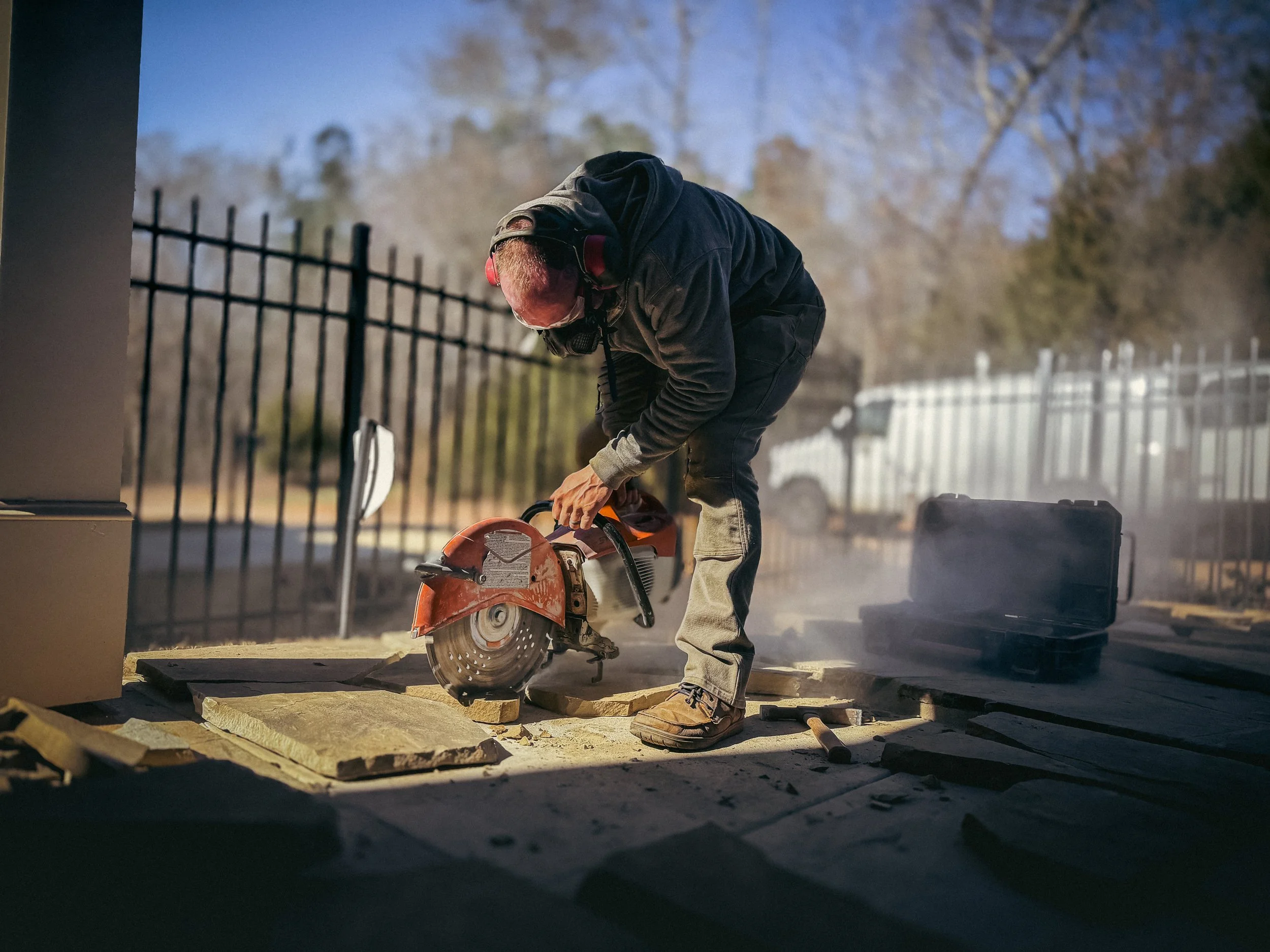
Here’s Nick in the moment during our flagstone patio project in Athens, Georgia. There’s something captivating about a concrete saw spraying dust as it cuts through a material that’s notoriously tough to manipulate. The combination of motion, texture, and raw power makes for some truly striking photography. Moments like these give a behind-the-scenes look at the skill and precision involved in landscape and hardscape projects.
For more of Nick and Jess’s work in landscape design and flagstone patios, check out Normal Landscape.